
Writing on carbon markets, climate finance and environmental regulation.
Notes on the Carbon Credit Trading Scheme, carbon credit documentation and cross-border mechanisms, alongside anonymised summaries of matters handled by the practice. Indirect Tax writing sits under its own filter.
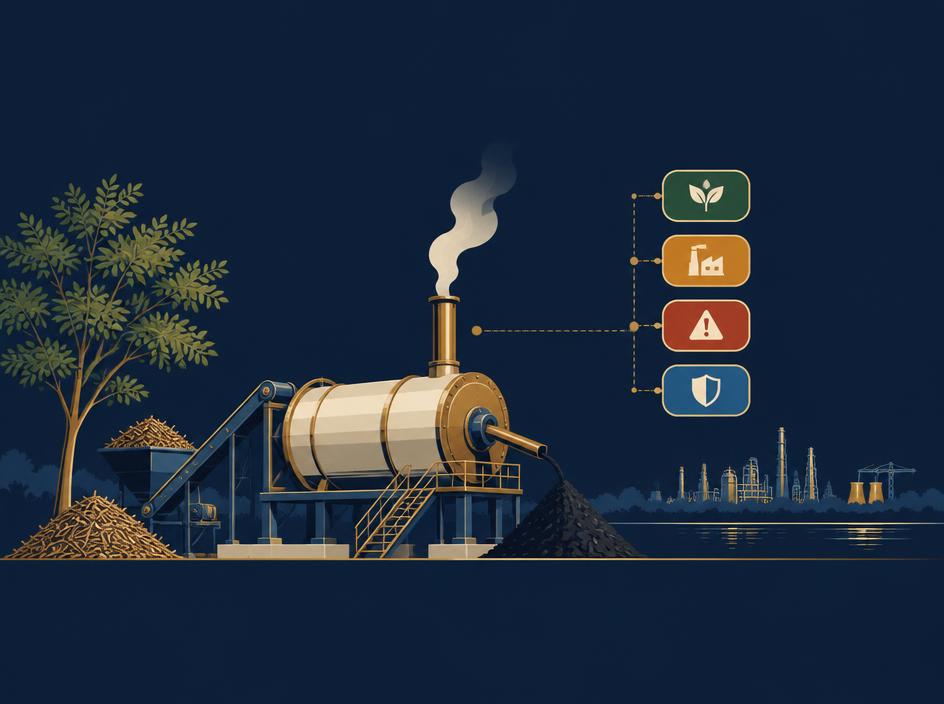
Which CPCB Category Does a Biochar Plant Fall Under? Reading the Charcoal Manufacturing Analogue
CPCB's sector-categorisation directions contain no explicit entry for biochar. Reading the residuary classification route alongside the charcoal manufacturing entry suggests how a pyrolysis-based biochar plant is likely to be categorised, and why the answer turns on kiln type and capacity.

UK CBAM Recognises India's CCTS: What It Actually Delivers for Exporters
The UK has recognised India's Carbon Credit Trading Scheme as a qualifying carbon pricing mechanism under its CBAM, effective 1 January 2027. The recognition opens a door, but walking through it takes documentation, verification and reliable emissions data.

India's Artisan Biochar Sector: Three Legal Questions Every Project Must Answer
Artisan biochar projects can get all three of their core legal questions wrong while appearing to operate perfectly well. Facility legality, carbon ownership and monetisation are separate questions, and a project design document answers none of them.
India's Carbon Credit Trading Scheme Is Almost Live: A Readiness Checklist for Obligated Entities
The CCTS has a regulator, a registry, three approved exchanges and roughly 800 Obligated Entities in scope, but no live trading day yet. A practical readiness checklist for covered facilities before the first trading window opens.

Green Credits Are Not Carbon Credits: A Guide to India's Green Credit Programme
A green credit under India's Green Credit Programme cannot be traded, resold, or used as an offset. Here is what the Green Credit Rules, 2023 actually create, what is operational as of mid-2026, and which obligations the instrument can genuinely discharge.
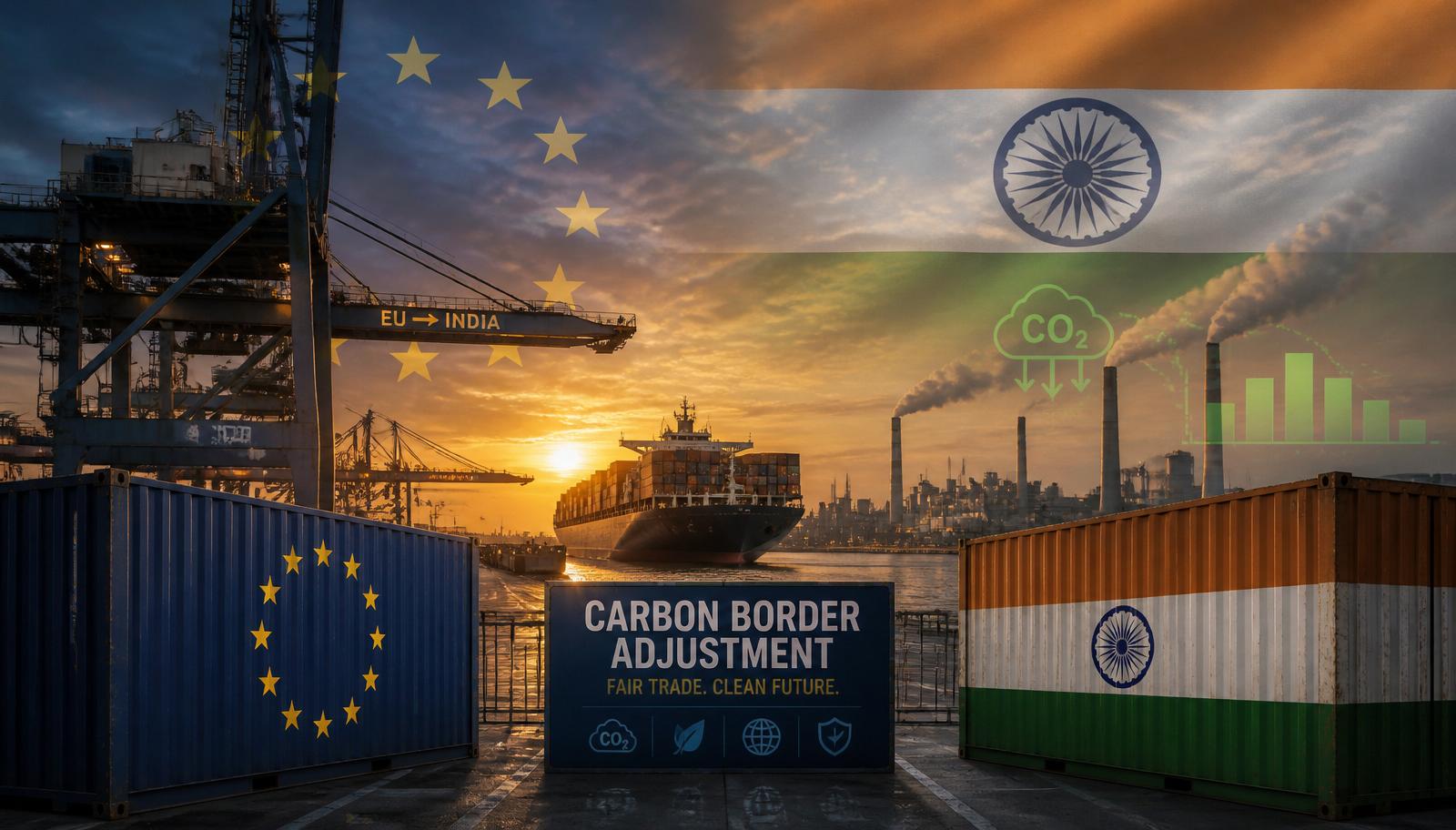
The India-EU FTA is Here: Is Your Carbon Strategy Ready for CBAM?
The India-EU FTA slashes tariffs on 99% of Indian goods, but for carbon-intensive sectors the real headline is CBAM. Here is how to protect your margins in the new era of green trade.

From Article 21 to the Boardroom: How India's Right to a Clean Environment Became Corporate Law
Part 1 of a 5-part series. India's sustainability law revolution began not in a boardroom but in a courtroom - and it explains why environmental compliance today carries the weight of a fundamental right.

SEBI's Quiet Revolution: How BRSR Turned Sustainability Into an Auditable Number
Part 2 of a 5-part series. In roughly four years, SEBI has taken a vague, narrative-style sustainability report and turned it into something that increasingly resembles a financial audit.

India's Carbon Market Goes Live: Inside the Carbon Credit Trading Scheme
Part 3 of a 5-part series. India's command-and-control model is now being layered with a market that lets companies buy, sell and bank the right to emit - with real money riding on environmental performance.

The Brussels Effect: How Europe's Carbon Border Tax Is Rewriting Contracts for Indian Exporters
Part 4 of a 5-part series. On 1 January 2026, CBAM stopped being a reporting exercise and became a real, payable cost - and Indian lawyers advising on cross-border contracts have had to scramble to keep pace.

Following the Money: Inside India's Green Bond Boom and the Lawyers Financing Net Zero
Part 5 of a 5-part series. Who pays for India's green transition, and on what legal terms? The answer is increasingly a specialised corner of corporate and banking law that barely existed a decade ago.
Voluntary e-Way Bill Closure: What Businesses Need to Know Before 1 August 2026
The GSTN has rolled out a new Voluntary e-Way Bill Closure facility, going live on 1 August 2026. Here is a plain-language breakdown of what it is, who it affects, and what your team should do to get ready.
Speak with counsel on a carbon market matter.
A confidential discussion to scope the matter and identify the regulatory, transactional and documentation questions it raises.