
UK CBAM Recognises India's CCTS: What It Actually Delivers for Exporters
The UK has recognised India's Carbon Credit Trading Scheme as a qualifying carbon pricing mechanism under its CBAM, effective 1 January 2027. The recognition opens a door, but walking through it takes documentation, verification and reliable emissions data.
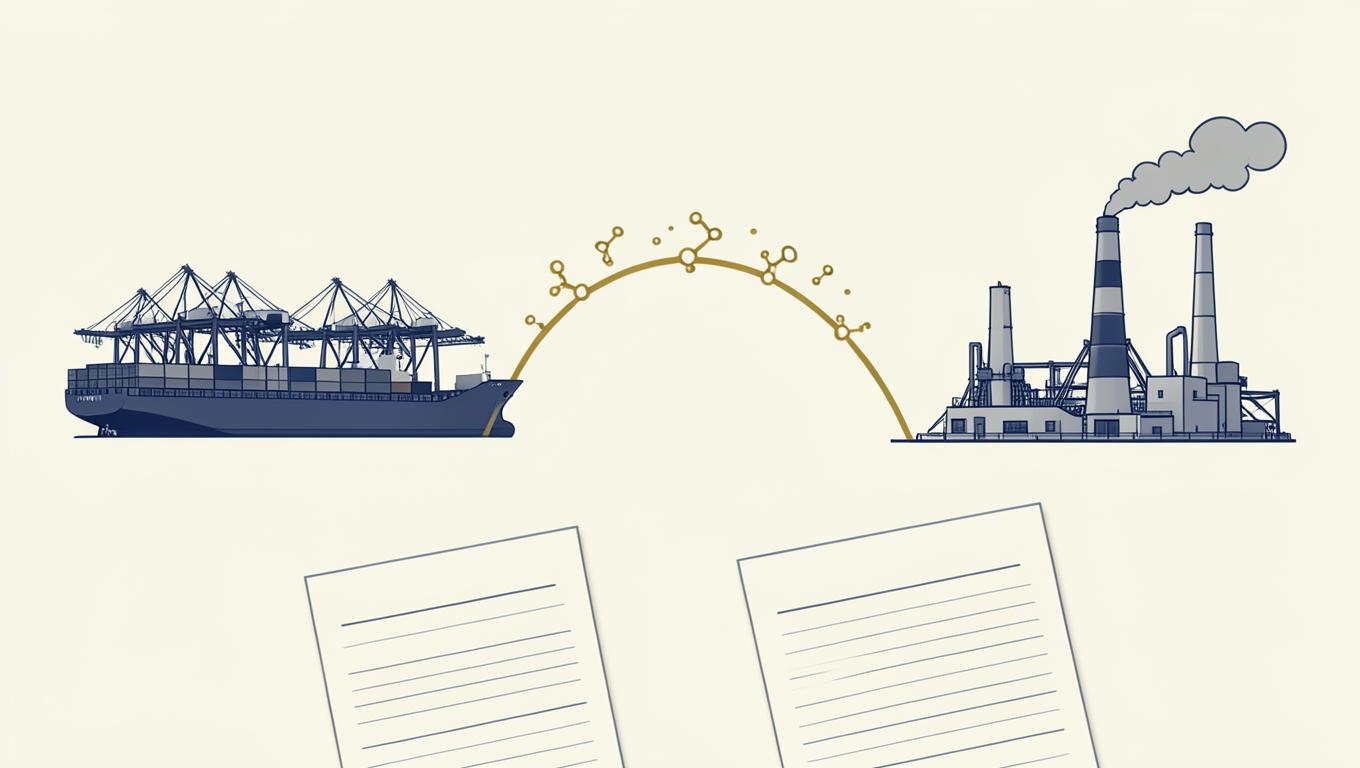
The UK has recognized India's Carbon Credit Trading Scheme (CCTS) as a qualifying carbon pricing mechanism under its Carbon Border Adjustment Mechanism, which takes effect January 1, 2027. On paper, that is good news for Indian exporters in carbon-intensive sectors. In practice, the recognition buys nothing on its own. It opens a door that Indian exporters will need documentation, verification, and reliable emissions data to actually walk through.
What the UK has agreed to
UK CBAM places a carbon cost on imports of aluminium, cement, fertiliser, hydrogen, iron, and steel, bringing them roughly into line with the carbon cost UK producers already bear. Because the UK now recognizes CCTS, importers of Indian goods in these categories may claim relief for carbon prices already paid in India, avoiding a second charge on the same emissions.
CCTS itself works on emissions intensity: obligated companies are measured against sector-specific targets for emissions per unit of output, not against an absolute cap. Firms that beat their target earn carbon credit certificates; firms that miss it must buy certificates to cover the shortfall. Alongside the compliance market, CCTS runs an offset mechanism open to projects outside the obligated sectors, spanning energy, industry, agriculture, forestry, waste, transport, and carbon capture, utilization and storage. India is not just building a penalty system for heavy industry. It is building a market.
The relief is conditional, not automatic
UK CBAM allows carbon price relief where the emissions in question were already priced under a qualifying overseas scheme, and it has now put CCTS on that list. But an importer cannot simply assert that Indian carbon pricing applied somewhere upstream. They have to prove it, for the specific emissions embedded in the specific goods being imported, with documentation the UK will accept.
That proof runs through a carbon pricing verification form, issued for the relevant installation, factory, or supply chain source, and then signed off by an independent verifier meeting UK requirements. No independent verification, no relief. The size of the relief itself turns on two variables: the effective carbon price actually paid, and the precise volume of emissions that price covered. Gaps or inconsistencies in either number will shrink the relief or eliminate it.
This is where the policy stops being a trade headline and becomes an operations problem. Recognition of CCTS tells UK customs that India's system is legitimate in principle. It says nothing about whether any individual exporter's paperwork will hold up.
Steel and aluminium carry the weight
Steel and aluminium producers have the most riding on this, since both sectors are carbon-intensive and sit at the center of the CBAM sector list. An exporter that can trace plant-level emissions data through to individual shipments, and match that data to carbon obligations actually paid under CCTS, stands to reduce its landed carbon cost in the UK market. One that cannot will pay the full border charge regardless of how competitive its price or tariff position otherwise is.
That is a real split in outcomes, not a hypothetical one. Large exporters already running emissions-monitoring systems built for other markets, the EU in particular, are positioned to move first. Smaller suppliers further down the chain, who may not yet track emissions at the plant level at all, are not.
Tariff relief and carbon cost run on separate tracks
The timing sits alongside the India-UK Comprehensive Economic and Trade Agreement, in force since July 15, 2026, covering bilateral trade the UK government put at roughly £48 billion in 2025. The agreement cuts tariffs across a wide range of goods. It does nothing to the carbon cost sitting alongside those tariffs, which is calculated and applied separately.
So the competitive picture for Indian exporters into the UK is now two-track. Tariff barriers are coming down under the FTA. Carbon performance is becoming a second, independent variable in landed cost, one that has nothing to do with the trade agreement and everything to do with whether a company's emissions accounting can survive UK scrutiny.
The EU precedent, and what India should read into it
None of this is unique to the UK. The EU's own CBAM already credits carbon prices paid in the country of production, subject to its own rules, and the UK recognition of CCTS follows a similar logic even though the UK's calculation and verification framework is its own. The signal is that border carbon adjustment is becoming a standard feature of trade with major economies, not a one-off UK or EU policy quirk.
For India, that carries two implications worth sitting with. Domestic carbon pricing decisions now have export consequences that go beyond the domestic compliance market. And countries that get verification infrastructure right early, not just the pricing mechanism itself, will be the ones whose exporters can actually convert recognition into savings abroad.
What decides the outcome from here
The UK's recognition of CCTS answers one question: is India's carbon market credible enough to count. It does not answer the harder one, which is whether individual Indian exporters can produce emissions data clean enough, and verification robust enough, to claim the relief they are now eligible for. That depends on plant-level monitoring, records connecting domestic carbon payments to specific export shipments, and independent verification that meets a foreign regulator's standard rather than India's own.
Companies that build that infrastructure now will treat UK CBAM as a manageable line item. Companies that wait will find that eligibility on paper and savings in practice are two very different things.