
Following the Money: Inside India's Green Bond Boom and the Lawyers Financing Net Zero
Part 5 of a 5-part series. Who pays for India's green transition, and on what legal terms? The answer is increasingly a specialised corner of corporate and banking law that barely existed a decade ago.
Part 5 of a 5-part series on India's Sustainability and Climate Change Laws
Every regulatory shift described so far in this series - the constitutional foundations, the SEBI disclosure regime, the carbon market, the European trade pressure - ultimately points toward one question: who pays for India's green transition, and on what legal terms? The answer is increasingly a specialised corner of corporate and banking law that barely existed a decade ago.
A Transition Measured in Trillions, Not Crores
The scale involved is genuinely difficult to grasp. India's installed renewable energy capacity had expanded to nearly 190 gigawatts by 2025, with the government targeting 500 gigawatts of non-fossil fuel capacity by 2030 - part of the five-point "Panchamrit" climate commitments announced at COP26. According to assessments cited by NITI Aayog, India's cumulative financing requirement to reach net-zero emissions by 2070 could run anywhere from ten trillion to twenty trillion US dollars. Domestic climate finance flows already exceed forty billion dollars annually, and that is before accounting for the much larger sums still needed.
Green Bonds: A Market Still Finding Its Footing
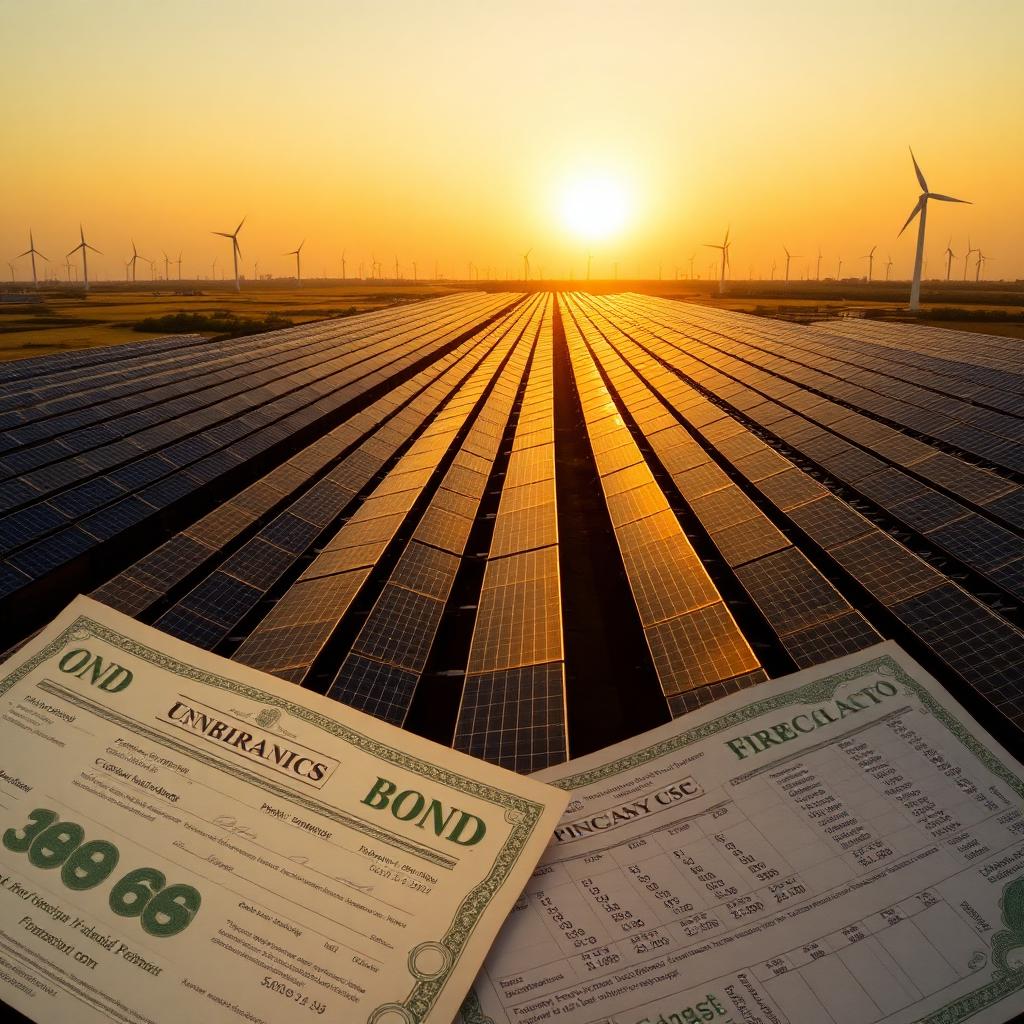
The instrument doing much of the heavy lifting is the green bond. India's cumulative green bond issuance had reached close to 25 billion US dollars by March 2026, driven overwhelmingly by the private sector rather than government issuance. The Government of India's own Sovereign Green Bond programme, launched in 2022 under a framework aligned with international Green Bond Principles, has so far raised roughly Rs 53,000 crore across eight issuances since 2022-23, with around half of that typically allocated to financing energy-efficient electric locomotives for Indian Railways.
Investor appetite for these sovereign bonds, however, has been inconsistent. Several auctions have drawn weak demand, forcing primary dealers to absorb unsold paper, and India has struggled to capture the kind of "greenium" - the lower borrowing cost that comes from strong investor demand for green-labelled debt - that some other sovereign green bond issuers have achieved. For lawyers and bankers structuring these instruments, that is not a footnote; it shapes how aggressively future issuances can be priced and what transparency commitments need to be built in to win investor confidence.
Private corporate green finance, by contrast, has shown more momentum. Large renewable energy developers have tapped international lenders directly - multi-billion-dollar facilities from consortiums of global banks, and debt raises from multilateral development banks such as the Asian Development Bank - bringing patient, long-term capital into Indian clean energy infrastructure and partially insulating developers from domestic interest rate swings.
Where the Lawyers Actually Sit in This Market
None of this capital moves without documentation that can survive scrutiny from both regulators and increasingly sophisticated investors. Lawyers in this space draft the power purchase agreements and land acquisition frameworks underpinning utility-scale solar and wind projects. They build the framework clauses in green bond prospectuses that govern reporting, verification and proceeds-tracking, ensuring funds are demonstrably spent on eligible green assets rather than general corporate purposes. They structure sustainability-linked loans where the interest margin itself moves up or down depending on whether a borrower hits certified carbon-reduction or energy-efficiency targets. And as India's National Green Hydrogen Mission gathers pace, they are increasingly drafting the technology-licensing and project-development agreements for an industry that, in legal terms, is being built from scratch.
The Practice Area That Used to Not Exist
Step back across all five pieces of this series, and a single pattern emerges. Constitutional courts created the rights framework. SEBI turned sustainability into auditable data. Parliament built a carbon market where none existed. Europe imported its own carbon price into Indian trade contracts. And now, capital markets law has had to absorb an entirely new asset class - green debt - at a scale measured in trillions of dollars over the coming decades.
None of this fits neatly into the old boxes of environmental law, corporate law or banking law. It demands lawyers fluent in emissions accounting, carbon market mechanics, sustainability reporting standards and global supply-chain due diligence rules, often within the same transaction. As India pushes toward its 2030 and 2070 climate targets, the firms and practitioners who built this fluency early will not just be advising the green transition from the sidelines - they will be among the people actually constructing it.