
The Brussels Effect: How Europe's Carbon Border Tax Is Rewriting Contracts for Indian Exporters
Part 4 of a 5-part series. On 1 January 2026, CBAM stopped being a reporting exercise and became a real, payable cost - and Indian lawyers advising on cross-border contracts have had to scramble to keep pace.
Part 4 of a 5-part series on India's Sustainability and Climate Change Laws
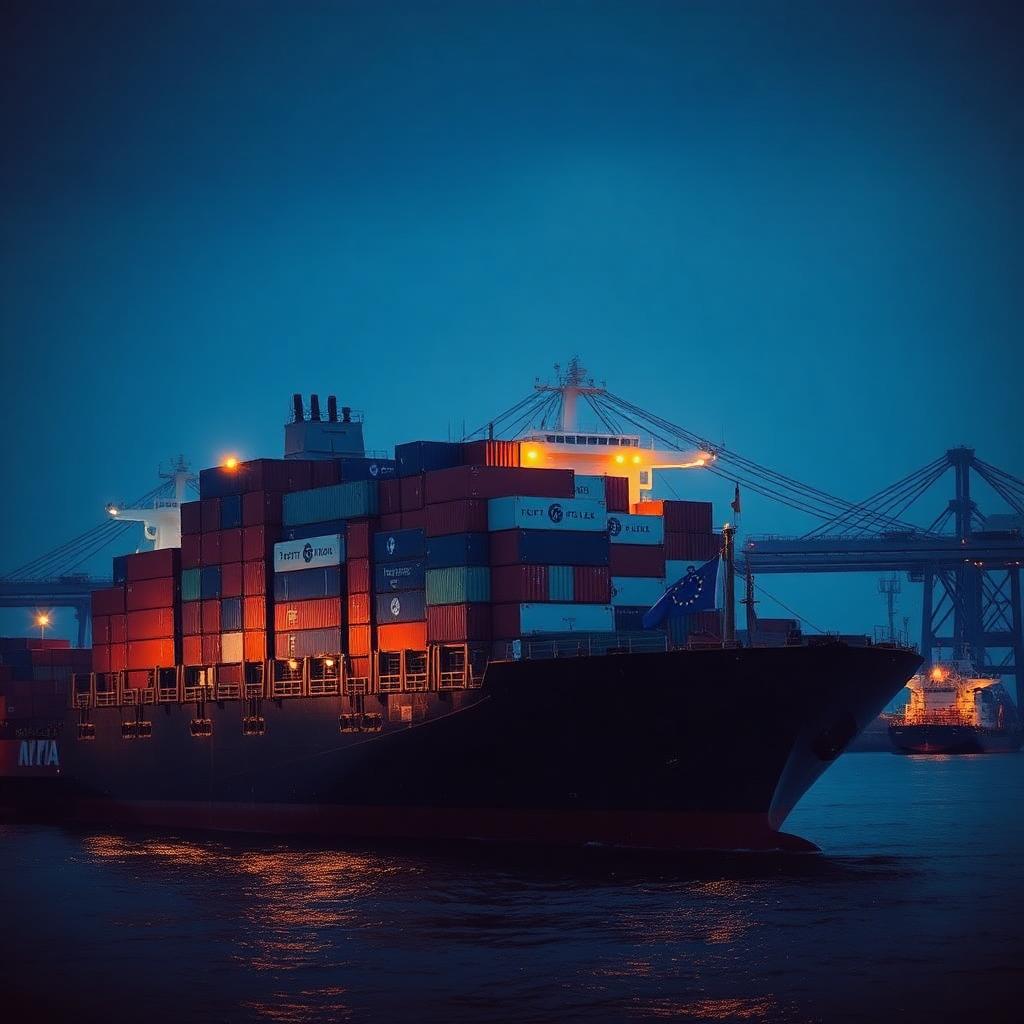
On 1 January 2026, the European Union's Carbon Border Adjustment Mechanism stopped being a reporting exercise and became a real, payable cost. For Indian exporters of steel, aluminium, cement, fertilisers and hydrogen, that date marked the start of a structural change in how trade with Europe gets priced - and Indian lawyers advising on cross-border contracts have had to scramble to keep pace.
What CBAM Actually Does
CBAM requires European importers of carbon-intensive goods to purchase certificates corresponding to the embedded emissions in those goods, unless an equivalent carbon price has already been paid in the country of origin. Since India does not yet have a fully operational domestic carbon price comparable to the EU's emissions trading scheme, Indian exporters are, for now, largely exposed to the full cost. The mechanism is being phased in alongside the EU's own withdrawal of free allowances for domestic industry, with full effect expected by 2034.
The numbers involved are not trivial. Analysis from the Global Trade Research Initiative suggests Indian exporters may need to cut prices by 15 to 22 percent just to keep European buyers from walking away, effectively absorbing the carbon cost themselves rather than passing it on. Separately, research from the Indian Council for Research on International Economic Relations estimates CBAM could shrink India's steel exports to the EU by as much as 24 percent. According to industry data, India's iron and steel exports to the EU had already declined sharply in the lead-up to the scheme taking full effect, and trade analysts now project India will bear close to 18 percent of total global CBAM costs - nearly double its actual share of EU import value - largely because of its continued reliance on blast-furnace steelmaking.
The European Union remains one of India's largest trading partners, and the products covered by CBAM are not peripheral exports - they sit at the heart of India's manufacturing and infrastructure economy. That is precisely why the government has reportedly begun working on a scheme to absorb up to 90 percent of CBAM compliance costs for micro, small and medium exporters, recognising that smaller suppliers lack the resources to build the emissions-tracking systems larger companies can afford.
CSDDD: The Other European Shoe to Drop
CBAM is not the only European instrument reshaping how Indian companies do business. The EU's Corporate Sustainability Due Diligence Directive requires large companies to identify, prevent and mitigate adverse environmental and human rights impacts across their entire global value chain - which means an Indian supplier feeding into a European company's procurement network can find itself contractually obligated to meet standards that have no equivalent under Indian domestic law.
Suppliers who cannot demonstrate compliance risk something more permanent than a price cut: outright exclusion from multinational procurement networks. That risk is forcing Indian exporters to conduct sustainability assessments and upgrade labour and environmental systems well ahead of any domestic legal requirement to do so - a clear example of international obligations driving domestic commercial practice even where Indian legislation has not caught up.
IFRS S1 and S2: Changing How Investors See India
Layered on top of trade-specific rules are the International Sustainability Standards Board's IFRS S1 and S2 disclosure standards, which establish globally comparable requirements for climate-related risk and financial materiality reporting. As global institutional investors increasingly use these standards as their default lens, Indian companies seeking foreign capital are finding that their sustainability disclosures get compared not just against domestic peers, but against companies in completely different jurisdictions operating under the same global rulebook.
What This Means for Legal Practice
For corporate lawyers, this European regulatory pressure has created an unusually concrete workstream: structuring cross-border agreements with carbon-cost pass-through clauses, mapping overlapping regulatory obligations across jurisdictions, managing third-party verification processes, and drafting representations and warranties that shield Indian entities from penalties triggered an ocean away. None of this existed as a distinct practice five years ago. Today, it is arguably where the commercial stakes are highest.
This international pressure has a domestic upside, however - it is accelerating exactly the kind of capital formation the final article in this series explores: India's rapidly growing green bond and renewable finance market, now worth tens of billions of dollars and central to the country's net-zero ambitions.